
+91 98941 76136
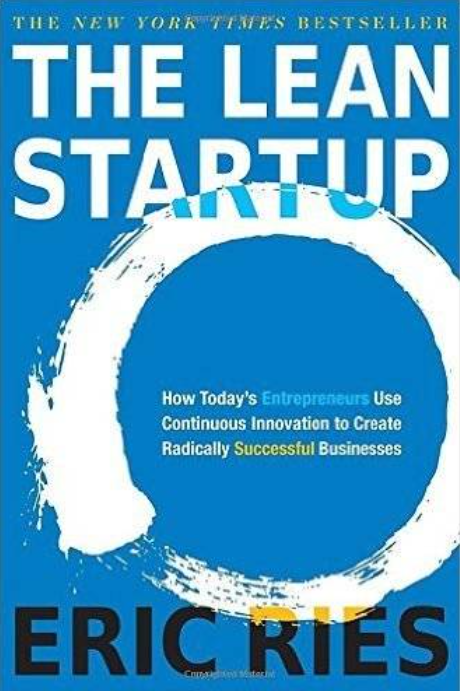
The Lean Startup by Eric Ries is one of the most influential books on entrepreneurship and innovation in the modern business world. The book introduces a new approach to building startups and new products by reducing risk, saving time, and avoiding waste.
Instead of spending years perfecting a product before launching, Eric Ries argues that startups should build quickly, test early, learn fast, and adapt continuously. This methodology is especially useful in today’s fast-changing and uncertain markets.
Success is not about having a perfect idea from the beginning, but about learning what customers actually want through experimentation.
According to Eric Ries, a startup is:
This definition applies not only to new companies, but also to:
This is the heart of the Lean Startup method.
This loop helps startups learn quickly and reduce failure.
An MVP is the simplest version of a product that:
The goal is learning, not perfection.
Validated learning means:
Startups should prove what works through experiments.
After learning from customers, startups must decide:
Knowing when to pivot is a key leadership skill.
Traditional accounting measures profits and revenue, but startups need different metrics.
These metrics show real progress.
The book explains how startups can grow sustainably by:
Innovation becomes a process, not a one-time event.
Eric Ries uses examples from:
These examples make the concepts practical and relatable.
It is useful for both tech and non-tech businesses.
The Lean Startup is not just a startup book—it is a new way of thinking about business and innovation. Eric Ries provides a practical framework for turning ideas into successful businesses while minimizing waste and uncertainty.
The book teaches that learning quickly is the ultimate competitive advantage.
← Back to Resources